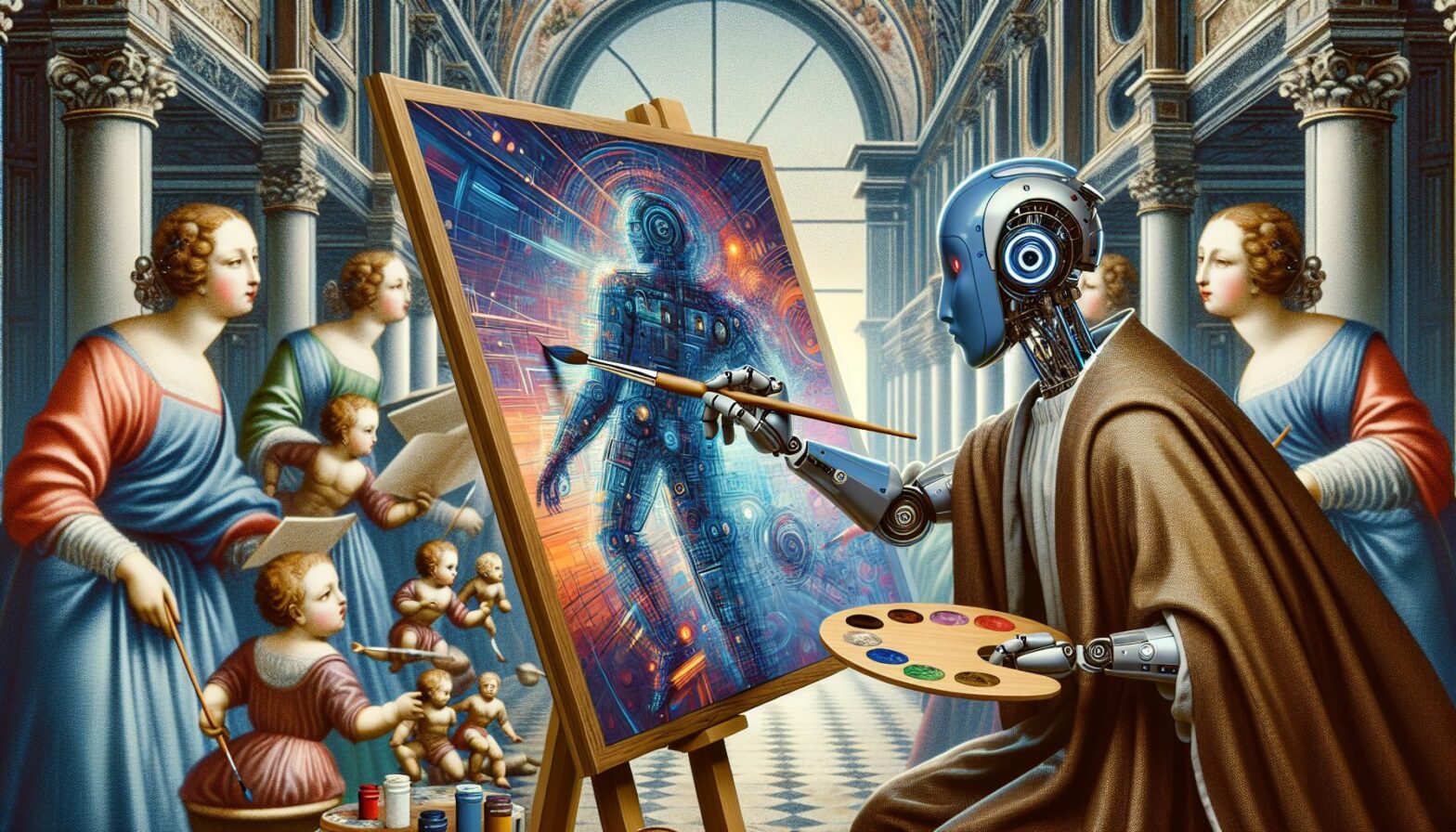
Hey tech aficionados! Have you ever found yourself lost in a piece of art, tangled in its colors, swallowed by its emotion, stupefied by its complexity, only to be completely floored when you find out it wasn’t painted by a human? Welcome to the wild world of AI in the creative arts! Today, I’m diving headfirst into this rabbit hole, where artificial intelligence isn’t just watching from the sidelines but actually picking up the paintbrush and jumping into the jam session. I’ll walk you through some mind-blowing innovations, unpack what they mean for all of us, and get a little philosophical about where our beloved art world is headed.
The Digital Da Vincis: AI’s Emergence in Art Creation
Let’s start at the beginning, or as close to one as you can get in a field that moves faster than your cat can knock over your coffee mug. The story of AI in art is as colorful and messy as the pieces it helps create. From basic algorithmic art (think geometric patterns that look like a math class fever dream) to today’s masterpieces, AI now creates artwork that’s honestly hard to tell apart from human-made pieces.
Remember when “AI-generated” meant pixelated blobs that looked like a two-year-old’s sugar rush drawings? Those days feel ancient now! Look at OpenAI’s DALL-E (and its sharper cousin, DALL-E 2) or Midjourney. These AI models can turn written prompts into images that don’t just capture human imagination but somehow expand on it. It’s like having a brilliant artistic assistant that never needs coffee breaks, never has Friday afternoon existential crises, just pure, relentless creation.
Balancing Tradition with Innovation: The Artist’s Perspective
Naturally, throw AI into any creative community and you’re going to see fireworks. Some artists view AI as this fascinating, if slightly robotic, collaborator that pushes them to explore new creative territory. Others, and I totally get this, see it as the beginning of an art-pocalypse, dragging us into some sterile, AI-dominated future where creativity gets turned into a commodity and artist’s block becomes a quaint memory.
And here comes the big debate! Using AI in art raises all these thorny questions about originality, authorship, and what makes art “real.” Can something a machine spits out hit you in the gut the same way human art does? Is algorithm-generated work actually art? (Insert your own internal jury deliberation here). But honestly, watching artists like Refik Anadol blend AI with human creativity to create things that make your jaw drop, it’s hard not to get excited about the possibilities.
Practical Magic: AI Tools for Creatives
On the practical side, AI is making art accessible in ways that would have seemed impossible just a few years ago. Remember those oil painting classes that emptied your wallet and left your hands permanently stained with titanium white? Now, thanks to neural networks, basically anyone with an internet connection can mess around in the digital art world.
Take Adobe’s Sensei, which weaves AI throughout Photoshop to supercharge photo editing. With a few clicks, you can pull off design moves that used to require a PhD in digital wizardry. Apps like BeCasso and DeepArt let you turn even your cat photos into something that looks like it belongs in the Louvre, right from your phone.
But here’s the thing that keeps me up at night: if AI makes these tools so accessible, what happens to actual artistic skill? If anyone can turn a photo into an impressionist painting with AI, where does that leave the people who spent years mastering brushwork? It’s exciting and terrifying at the same time.
Our Creative AI Future: Speculations and Wild Guesses
Okay, time to let imagination run wild. If we follow this path deeper down the rabbit hole, where might we end up? Could we see an entirely new art movement, as different from what came before as post-modernism was from surrealism?
Picture interactive digital art that changes based on your mood (detected through some fancy biometric scanner, maybe I’m getting carried away here). We might find ourselves wandering through VR museums, guided by AI curators with the combined knowledge of every art critic who ever lived. Art could become this living, breathing response to real-time events instead of static snapshots frozen in time.
And then there’s that nagging voice asking, “What happens to human artists when AI is writing bestsellers and painting masterpieces?” Look, there are definitely going to be some bumps along the way. But instead of replacing human creativity, maybe AI will just give it a bigger stage, letting more diverse voices join the conversation.
Wrapping it Up: AI, Humans, and the Expanded Canvas
So where does this leave us, a bunch of tech nerds getting excited about ones and zeros picking up paintbrushes? AI in the creative arts is like a shot of espresso to our cultural system. It speeds everything up, makes us a little jittery about what’s coming, but ultimately gets us pumped about what’s possible when human creativity teams up with digital innovation.
In the end, this isn’t just about AI making art. It’s about how AI changes the whole relationship between humans and the tools we create. It’s going to take collaboration, honest conversations, and probably a fair bit of chaos to figure out this new creative landscape. But isn’t that what progress looks like anyway?
Here’s to an artistic future that’s beautifully enhanced by our AI partners! Can’t wait to see what wild stuff you all come up with next. Stay curious, stay creative. Peace out.