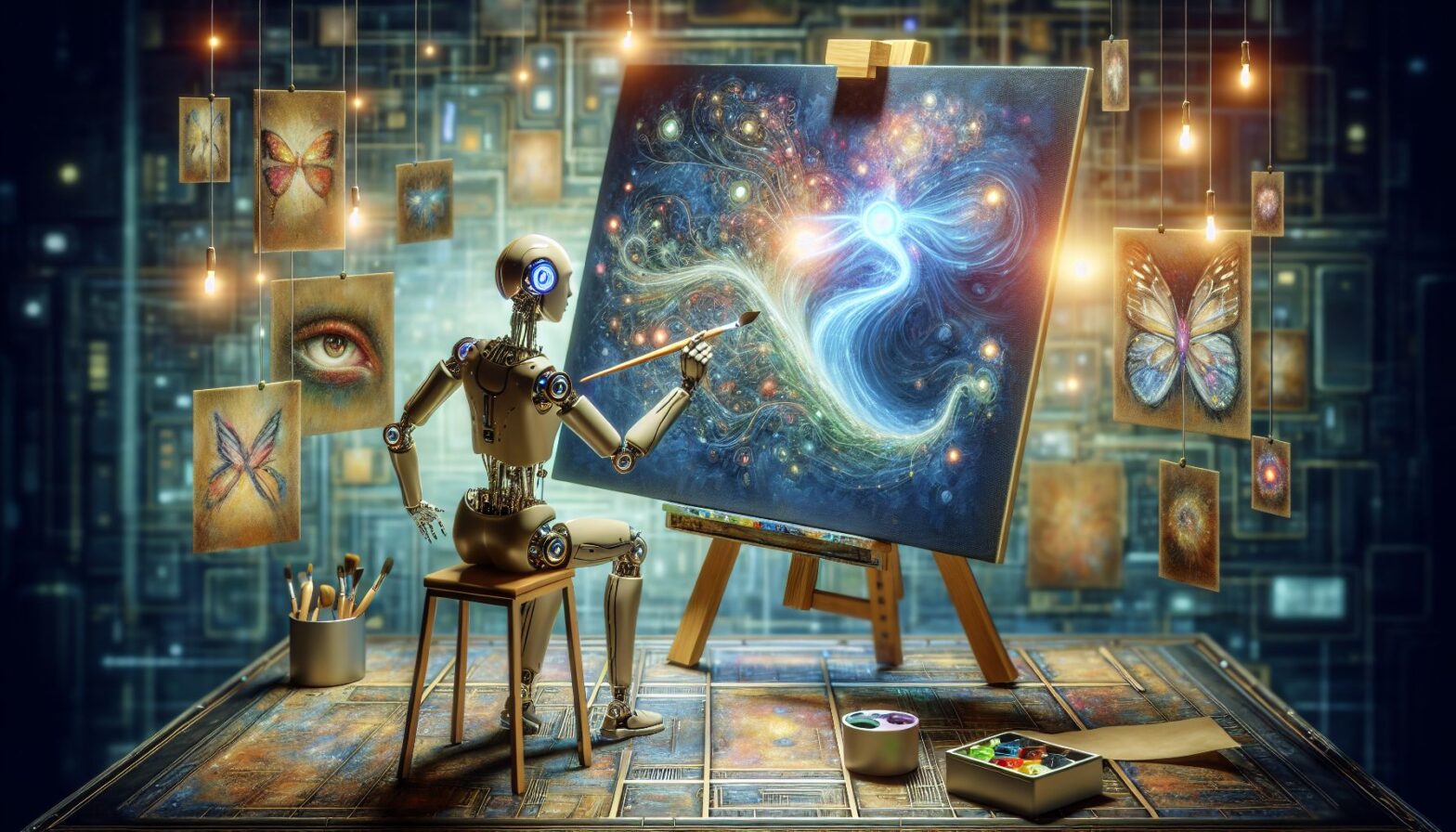
Hey fellow tech enthusiasts! Today I’m buzzing with excitement to talk about one of my favorite intersections—where art meets technology. And I’m not talking about the kind of tech that just gives artists a new brush. Nope! We’re getting into the world of Artificial Intelligence (AI) in the creative arts, where the lines between human and machine-generated creativity are blurring faster than your fingers scrolling through TikTok.
The Frontrunners in AI Artistry
Let’s start with a few players who’ve been making headlines with AI in the creative scene. OpenAI’s DALL-E, for example, has been genuinely mind-blowing. This AI model can generate images from plain text descriptions, be it “a surrealistic painting of a cat reading a book” or something outlandishly specific like “a steampunk-themed hummingbird sipping tea.” Though DALL-E wasn’t the first AI to generate images, it’s a popular go-to for its impressive and somewhat peculiar creativity.
Besides OpenAI, there’s also RunwayML, a company that’s been creating waves with its real-time video editing capabilities powered by AI. Think of it as the Photoshop-on-steroids era, offering creative professionals features like object removal and video style transfer with a mere ‘click and drag’ interface.
The Artists and the Algorithms
While these tools are jaw-droppingly cool, it raises a question: who’s really creating here? Is AI the artist, or is it a hyper-intelligent instrument wielded by creative humans? This philosophical puzzle could fill many a coffee shop debate.
Some artists, like Sougwen Chung, see AI as a collaborator rather than a competitor. She works with robots in creating beautiful pieces of visual art, letting the AI contribute strokes under her supervision. It’s a bit like an artist and their apprentice, albeit the apprentice is made of circuits and code.
On the flip side, there are purists who argue that art is fundamentally a human endeavor, tied to our emotions and experiences. If an algorithm can crank out a Picasso or a Pollock with ease, does it lose the soulfulness inherent in these works? Or is the soulful part found in how humans choose to use these new tools?
Implications for the Future of Creativity
Let’s put on our speculation hats here. What if the creative industry embraces AI so fully that human-made art becomes the rarity? Imagine going to galleries where the placards next to each piece detail the AI and data sets used, rather than the artist’s past. While this seems a ways off, it’s not an unimaginable future.
That said, AI isn’t perfect, it still requires massive amounts of data to learn and generate accurate results. The hilarious quirks and mistakes made by AIs offer their own unintentional art form, as anyone who’s seen AI-generated faces with too many eyes can attest. We might find future art exhibits featuring these “Happy Accidents of Artificial Intelligence.”
Challenges on the Palette
Not all is sunshine and rainbows in the land of AI artistry. Intellectual property becomes a sticky wicket when AI starts creating content at scale. If an AI is trained on existing art to learn styles and generate new pieces, how do we ensure that the original artists, not to mention the AI developers, get fair recognition and compensation?
Moreover, there’s the looming threat of AI art flooding the market, saturating it to the point that it might devalue human-created art. I mean, if everyone and their second cousin can whip up an AI masterpiece, will people still pay top dollar for a piece painstakingly crafted by human hands?
Balancing Tech and Creativity
While this all sounds like a crossroad between the next great Renaissance or a dystopian art apocalypse, there’s room for optimism. Apps that help non-artists create art could democratize creativity. Schools might use AI tools to dig out hidden talents in students or help individuals with disabilities express themselves artistically.
You could also argue that AI might help us redefine what art is. It forces us to revisit age-old assumptions and breathe new life into the creative process. Isn’t that what art is all about: the constant reinvention of perception?
Conclusion: A Harmonious Duet
As we reel at the pace of technological advancement, let’s remember that AI in creative arts remains in its infancy. We’ll likely witness even more dazzling breakthroughs and thought-provoking debates in the coming years.
At its best, AI can be a partner in creativity, helping us push boundaries and experiment like never before. We have the chance to craft a future where tech and creativity blend so naturally that it becomes an extension of our artistic selves, much like the canvas, paintbrush, or camera lens has been for centuries.
Till next time, keep creating, keep dreaming, and don’t let your algorithms catch dust. Cheers!